New & Now
Sumo Column, Part 2: Understanding Sumo Rankings from Jonokuchi to Ozeki
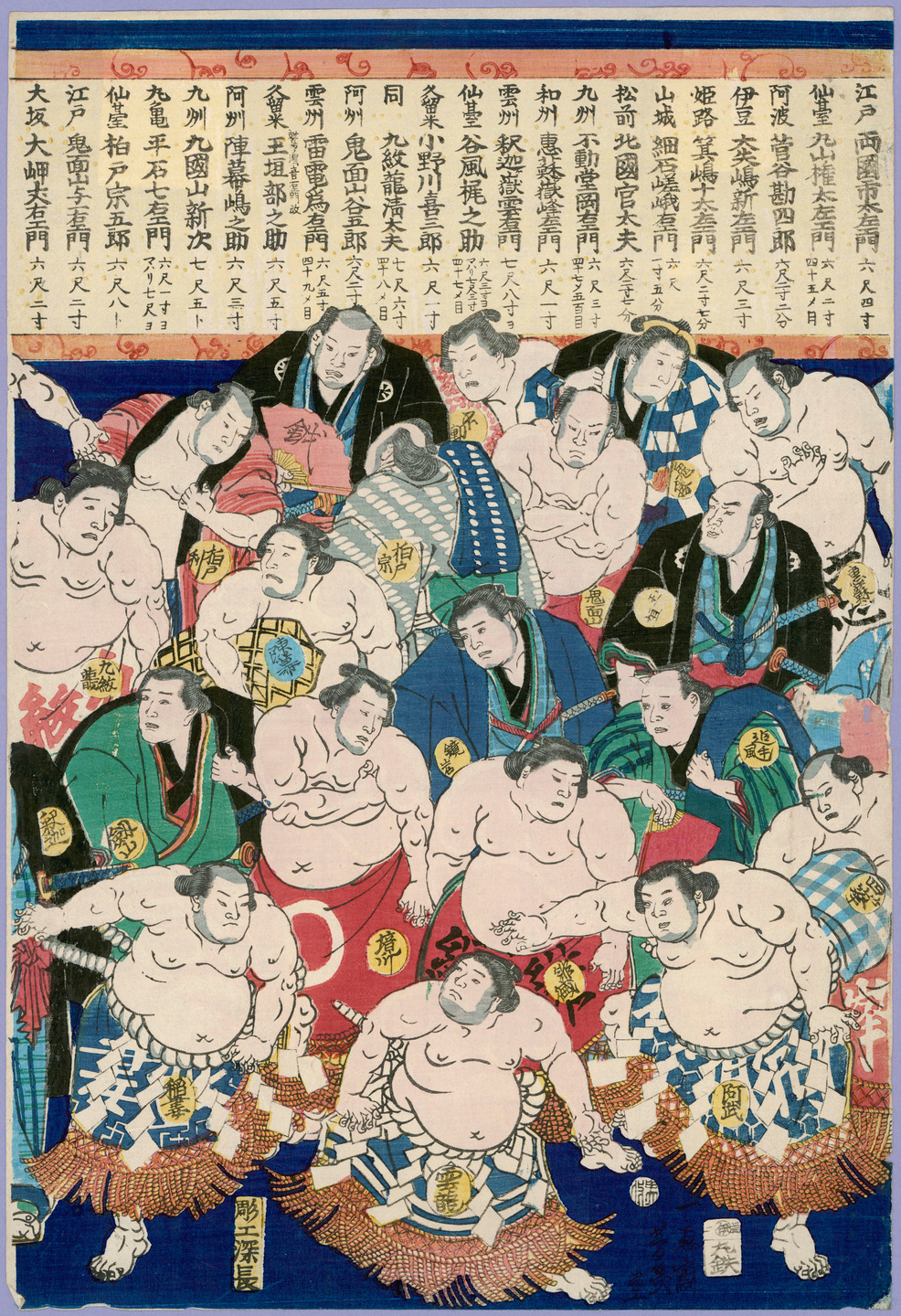
When watching Grand Sumo, one of the things that makes the experience more enjoyable is knowing the Banzuke, the official ranking chart for sumo wrestlers.
The Banzuke is published before each Honbasho, or official Grand Sumo Tournament. Wrestlers move up or down the rankings depending on their results in each tournament, aiming for higher positions step by step.
In Sumo Column Vol.1: Yokozuna and the Banzuke in Grand Sumo, we introduced the Banzuke and the highest rank, Yokozuna. In Part 2, we will look at how wrestlers climb the rankings, from Jonokuchi to Ozeki.
For visitors who are new to sumo, understanding the ranking system can make each wrestler’s journey, growth, and challenges feel much more familiar.
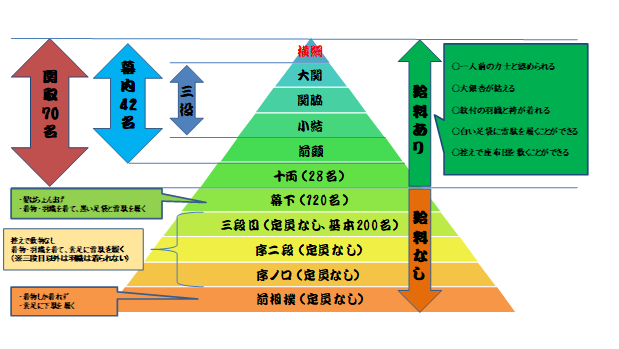
| Status | Division / Category | Rank (within division) |
|---|---|---|
|
Sekitori professional wrestlers in the top two divisions |
Makuuchi top division |
Yokozuna |
| Ozeki | ||
| Sekiwake | ||
| Komusubi | ||
| Maegashira | ||
|
Juryo second division |
Numbered positions | |
|
Rikishi Yosei-in trainee wrestlers in the lower divisions |
Makushita third division |
Numbered positions |
|
Sandanme fourth division |
Numbered positions | |
|
Jonidan fifth division |
Numbered positions | |
|
Jonokuchi sixth division |
Numbered positions | |
|
Banzuke-gai unranked category below Jonokuchi |
— |
* Ozeki, Sekiwake, and Komusubi are collectively called Sanyaku.
* In divisions below makuuchi, wrestlers are placed in numbered positions within each division rather than in separately named ranks.
Wrestlers Starting from the Lower Divisions
In the Grand Sumo ranking system, wrestlers in Makushita and below are known as Rikishi Yosei-in, or trainee wrestlers in the lower divisions.
This group includes wrestlers in Makushita, Sandanme, Jonidan, and Jonokuchi. Their treatment differs from Sekitori, the wrestlers ranked in Juryo and above, but all of them train hard every day as they aim for higher ranks.
Jonokuchi
Jonokuchi is the lowest division in the Banzuke.
Many new wrestlers make their first appearance in the previous tournament and then have their names placed on the Banzuke in Jonokuchi, beginning their full journey as ranked sumo wrestlers. There are some exceptions.
There is no fixed number of wrestlers in Jonokuchi, so the number changes from tournament to tournament. The championship prize for Jonokuchi is 100,000 yen.
If a wrestler is absent for an entire tournament because of injury or another reason, his name may disappear from the Banzuke. In that case, he may have to start again from maezumo, the preliminary bouts before entering the rankings. This unranked status is called Banzuke-gai.
Sumo Note: “Magnifying Glass” and “Mada Mada Jonokuchi”
On the printed Banzuke, the names of Jonokuchi wrestlers are written in very thin, small characters. Because the names are so small, this section is sometimes nicknamed mushimegane, meaning “magnifying glass,” as if you might need one to read it.
Japanese also has the phrase mada mada jonokuchi, which comes from the sumo rank Jonokuchi. It means that something has only just begun and has not yet reached its serious or full stage.
For first-time sumo viewers, Jonokuchi can be seen as the starting point of a wrestler’s ranked career. By understanding how wrestlers begin at the bottom of the Banzuke and work their way upward, each wrestler’s journey becomes easier to follow.
Jonidan
Jonidan is the division one level above Jonokuchi.
It is called Jonidan because it appears on the second row from the bottom of the Banzuke. During the Edo period, it is said to have been called Yondanme, meaning the fourth row from the top.
Like Jonokuchi, Jonidan has no fixed number of wrestlers. The number changes depending on the tournament.
Because the divisions from Sandanme and above have fixed capacities, wrestlers who do not fit into those divisions are placed into Jonidan and Jonokuchi. The championship prize for Jonidan is 200,000 yen.
The difference in treatment between Jonidan and Jonokuchi is said to be small, apart from the amount of tournament allowance. Even so, moving up from Jonokuchi to Jonidan can be seen as a wrestler’s first step forward.
Sandanme
Sandanme is the division above Jonidan. Counting from the bottom of the Banzuke, it is the third division after Jonokuchi and Jonidan.
The name Sandanme comes from the fact that the ring names of wrestlers in this division are written on the third row from the top of the Banzuke.
Sandanme has a fixed capacity. Since the January 2025 tournament, it has had 80 places on each of the East and West sides, for a total of 160 wrestlers. However, wrestlers who enter through Sandanme tsukedashi, a special placement for new wrestlers with strong results in student or amateur sumo, are not included in this number.
From the January 1984 tournament to the March 2022 tournament, Sandanme had 100 places on each of the East and West sides, for a total of 200 wrestlers. Later, partly because of a decrease in the number of wrestlers, the capacity was revised to the current number. The championship prize for Sandanme is 300,000 yen.
Sandanme is a competitive division for young wrestlers and those aiming to move further up the rankings. If a wrestler performs well after his first tournament, he may be promoted to Sandanme within just a few tournaments. In particular, a wrestler who finishes with a perfect 7–0 record is said to be promoted in the next Banzuke regardless of whether he wins the division championship.
Makushita
Makushita is the division above Sandanme and below Juryo.
Originally, the division below Juryo and above Sandanme was called Makushita Nidanme. This was later shortened to Makushita.
Makushita is an extremely important division for sumo wrestlers. This is because promotion to the next division, Juryo, means that a wrestler becomes a Sekitori, and his treatment changes significantly.
The difference between the upper ranks of Makushita and the lower ranks of Juryo may look small on the Banzuke, but the difference in status and treatment is very large. For many wrestlers, promotion from Makushita to Juryo is one of the major goals of their career.
Wrestlers Known as Sekitori
Juryo
Juryo is the division above Makushita. Its formal Japanese name is Jumaime, while the division is commonly known as Juryo.
Wrestlers promoted to Juryo or above are called Sekitori. Once a wrestler becomes a Sekitori, he is treated as a fully established professional sumo wrestler. In ring announcements, a Sekitori is referred to with the honorific suffix “-zeki” after his name, such as “Enho-zeki.”
When watching Grand Sumo, if you hear a wrestler being called “-zeki,” it means that the wrestler is ranked in Juryo or above.
The name Juryo is said to come from the late Edo period to the early Meiji period, when wrestlers ranked up to the top ten positions below Makuuchi received a salary of ten ryo.
Since expressions such as “second rank of Jumaime” could be confusing, the name Juryo came to be used for Jumaime, based on the old title and salary.
Sumo Note: The Word “Sekitori”
There are several theories about the origin of the word Sekitori.
One theory says that the strongest wrestler, who fought in the final bout of the day, was described as “taking the seki” or fighting “seki no sumo,” and that this became the origin of the word.
Another theory says that during sumo performed before the emperor or before shoguns and daimyo families, winning repeatedly and receiving a reward was described as “taking the seki.” Strong wrestlers then came to be called Sekitori.
During the Edo period, the word Sekitori appeared in the titles of sumo-related materials and plays, such as Sekitori Senryo Nobori. This suggests that the word was already widely known at the time.
Juryo is a major milestone where a wrestler is recognized as a Sekitori. When looking at the Banzuke, paying attention to how close a wrestler is to reaching Juryo can make sumo even more enjoyable.
Makuuchi and Maegashira
Makuuchi is the highest division in Grand Sumo.
Makuuchi includes wrestlers ranked Yokozuna, Ozeki, Sekiwake, Komusubi, and Maegashira. Wrestlers in Makuuchi are listed on the top row of the Banzuke.
Many of the wrestlers often introduced on television broadcasts and in the news belong to this division.
In Japanese, the characters 幕内 can be read as either makuuchi or makunouchi. NHK’s Grand Sumo broadcasts use the reading makunouchi. In this article, we use the term Makuuchi.
The origin of the word Maegashira is said to come from the Edo period, when wrestlers listed on the Banzuke were called kashira, or “heads,” in contrast to wrestlers in maezumo, the preliminary stage. At one time, all wrestlers listed on the Banzuke were considered Maegashira.
Today, Maegashira refers to Makuuchi wrestlers who are not ranked Yokozuna or in the Sanyaku ranks of Ozeki, Sekiwake, and Komusubi. These wrestlers may also be called Hiramaku, meaning rank-and-file wrestlers in the top division.
One theory says that the word Makuuchi comes from sumo performed before shoguns or daimyo families. At such events, top wrestlers were allowed to enter inside the manmaku, or surrounding curtain.
The Makuuchi division has a fixed capacity of 42 wrestlers. However, the number of Maegashira changes depending on the number of Yokozuna and Sanyaku wrestlers.
Wrestlers Aiming for the Top Ranks
Sanyaku
Sanyaku generally refers to the three titled ranks of Ozeki, Sekiwake, and Komusubi.
Yokozuna is treated separately as the highest rank. Historically, however, before Yokozuna was established as the highest rank in its modern sense, Ozeki was considered the highest rank.
Until 1909, when Yokozuna was formally positioned as the highest rank for wrestlers, the term Sanyaku was used to refer to top-ranked wrestlers from Komusubi upward. Even today, in explanations of treatment and status, Sanyaku may sometimes refer only to Sekiwake and Komusubi, excluding Ozeki.
On the final day of a Grand Sumo tournament, there is a ritual called Sanyaku soroi-bumi, in which Yokozuna also appear. Such expressions show the long history and distinctive customs of the sumo ranking system.
Komusubi
Komusubi is one of the upper ranks in Makuuchi.
It is the fourth-highest rank after Yokozuna, Ozeki, and Sekiwake. Wrestlers at this rank often face top-ranked opponents.
In principle, at least one Komusubi is placed on both the East and West sides of the Banzuke. There are no fixed rules for promotion, but promotion is usually decided based on the wrestler’s performance in the previous tournament.
On the other hand, if a Komusubi finishes with a losing record, he is generally demoted. Komusubi is an important rank where a wrestler’s ability against top opponents is tested.
Sekiwake
Sekiwake is the third-highest rank after Yokozuna and Ozeki.
Like Komusubi, at least one Sekiwake is placed on both the East and West sides of the Banzuke. Promotion is mainly decided based on the wrestler’s performance in the previous tournament.
Sekiwake is an important rank because wrestlers often face Yokozuna and Ozeki. For wrestlers aiming to become Ozeki, consistently achieving winning records at Sekiwake is especially meaningful.
On the other hand, a losing record generally leads to demotion. Sekiwake is a rank where both strength and consistency are required for wrestlers hoping to reach Ozeki.
Ozeki
Ozeki is a very high rank, second only to Yokozuna.
Today, Yokozuna is considered the highest rank, but until 1909, Ozeki was the highest rank in sumo. The name Ozeki is said to express respect by adding the character meaning “great” to a high-ranking Sekitori.
Promotion to Ozeki is not granted simply because a wrestler achieves a winning record at Sekiwake. A wrestler must continue to produce excellent results. In general, a total of around 33 wins over the most recent three tournaments is considered one guideline. However, there have been exceptions, such as Kitanofuji, who was promoted to Ozeki with 28 wins.
Sumo Note: Kadoban for Ozeki
Ozeki has a system known as kadoban.
When an Ozeki finishes a Honbasho with a losing record, the next tournament becomes kadoban. If he achieves a winning record in that tournament, he escapes kadoban and keeps his Ozeki rank.
However, if he also finishes the kadoban tournament with a losing record, making two losing records in a row, he is demoted to Sekiwake. If he then wins 10 or more bouts in the following tournament as Sekiwake, he can return to Ozeki in the next Banzuke.
Ozeki is a rank that requires not only strength, but also the ability to produce stable results over time. It is one of the ranks where a wrestler’s ability and responsibility are especially clear.
A recent example is Kirishima, who finished the March 2026 tournament in Osaka with a 12–3 record and won his third championship. He returned to Ozeki for the first time in two years. At the promotion ceremony, he said, “I humbly accept. I will work hard and aim even higher.”
Understanding the Banzuke Makes Sumo More Enjoyable
The Banzuke is more than a simple ranking chart.
It contains the stories of each wrestler’s effort, growth, recovery from injury, and challenge to reach higher ranks.
For example, a wrestler may begin in Jonokuchi, move up through Jonidan, Sandanme, and Makushita, become a Sekitori in Juryo, and then aim for Makuuchi, Sanyaku, and Ozeki. Once you understand that journey, each bout can look different.
Katsuragi City is known as the birthplace of sumo. At Katsuragi City Sumo Museum “Kehaya-za,” visitors can learn about sumo history and wrestlers connected to the local area.
When you watch Grand Sumo after learning how the Banzuke works, you can look beyond wins and losses and pay attention to the paths each wrestler has taken.
Find a favorite wrestler and follow how his position on the Banzuke changes over time.
Pay Attention to Wrestlers Climbing the Banzuke
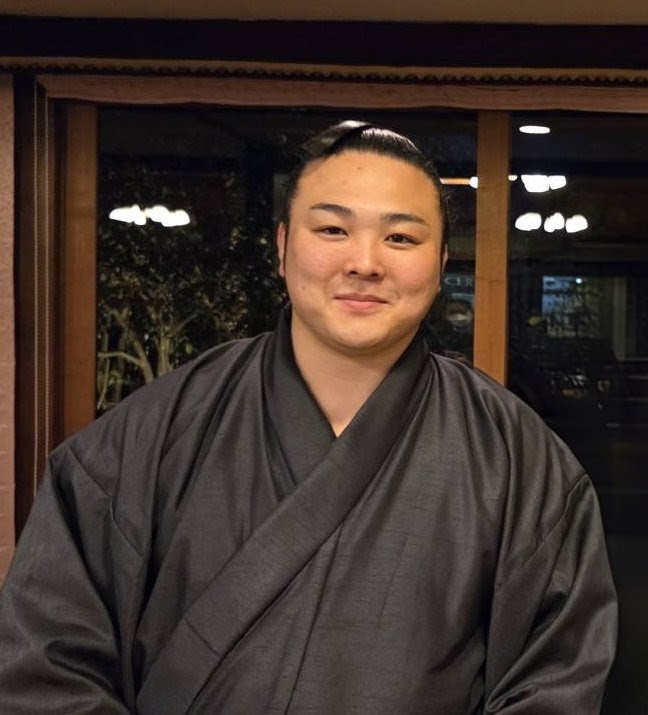
Photo: Enho-zeki visiting Katsuragi City Sumo Museum “Kehaya-za” on February 23, 2026
One example of a wrestler who climbed back up the Banzuke is Enho.
For the May 2026 tournament, also known as the Summer Tournament, four wrestlers were announced as promoted to Juryo. The new Juryo wrestler was Okariryu, while Tochitaikai, Hakuyozan, and Enho returned to Juryo.
Enho, a former Makuuchi wrestler, injured his neck during the May 2023 tournament and withdrew partway through the tournament. He suffered a serious spinal cord injury and was absent for six consecutive tournaments. After that, he returned from Jonokuchi and gradually climbed back up the Banzuke.
It is said that this was the first case since the Showa period in which a former Makuuchi wrestler fell all the way to Jonokuchi and then returned to Sekitori status. When he visited Katsuragi City Sumo Museum “Kehaya-za,” he said, “I am training so that I can return to Makuuchi,” and showed a smile that suggested he was in good condition.
Please also pay attention to wrestlers who move up and down the Banzuke.
Visit Katsuragi City Sumo Museum “Kehaya-za”
_sizedown-1024x683.jpg)
Katsuragi City Sumo Museum “Kehaya-za” opened in May 1990. It was established to preserve the legend of Taima no Kehaya, who is regarded as one of the legendary founders of sumo, to promote sumo, often regarded as Japan’s national sport, and collect materials related to it.
Museums dedicated specifically to sumo are rare in Japan, and “Kehaya-za” is known as an important cultural hub for sumo in the Kansai region. It is enjoyed not only by sumo fans, but also by visitors who want to learn about sumo history and culture.
In recent years, as the number of international visitors to Japan has increased, the museum has also attracted attention from foreign tourists as a place where they can experience sumo culture firsthand.
Learn About the History of Sumo
On the second floor of the museum, visitors can see many materials related to sumo, including a timeline of sumo history and displays about local wrestlers.
The museum’s collection includes more than 13,000 items, and special exhibitions are also held for limited periods. Tablet devices are available to help explain sumo movements and exhibition materials, allowing visitors to learn more deeply about sumo.
Visitor Information
- Facility name: Katsuragi City Sumo Museum “Kehaya-za”
- Address: 83-1 Taima, Katsuragi City, Nara Prefecture
- Phone: 0745-48-4611
- Opening hours: 10:00 a.m. – 5:00 p.m.
- Closed: Tuesdays and Wednesdays
- Note: Open on national holidays.
- Admission: Adults, including high school students and older: 300 yen; children, including elementary and junior high school students: 150 yen; preschool children: free
Special Exhibition: “Local Sumo Wrestlers Exhibition”
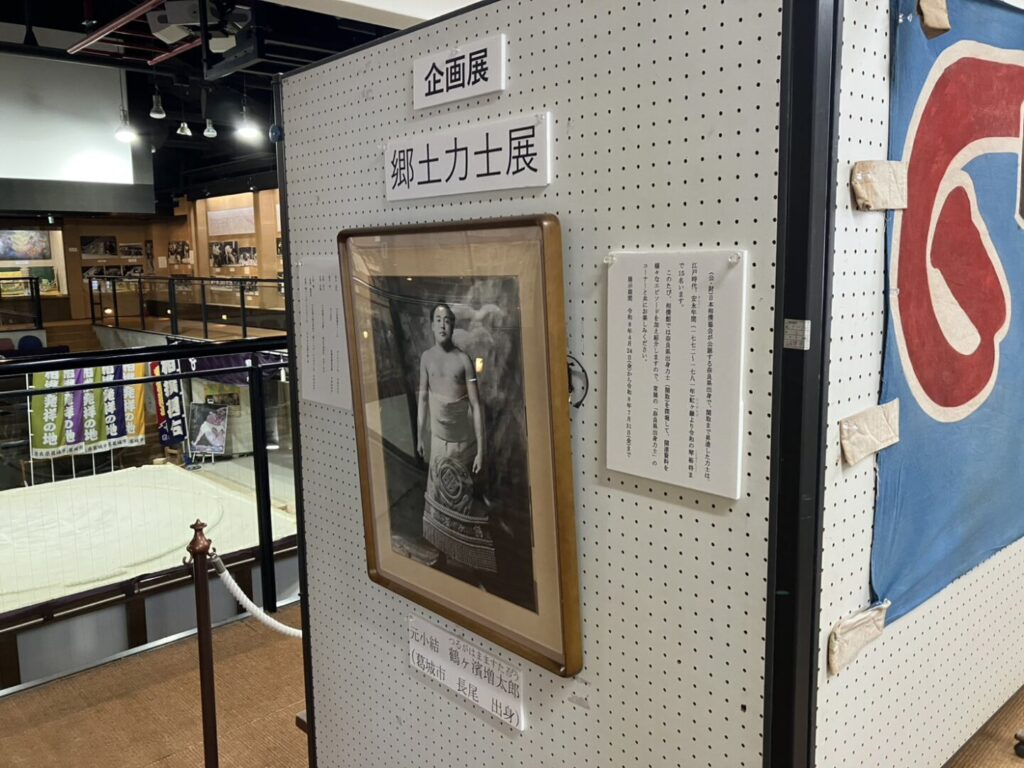
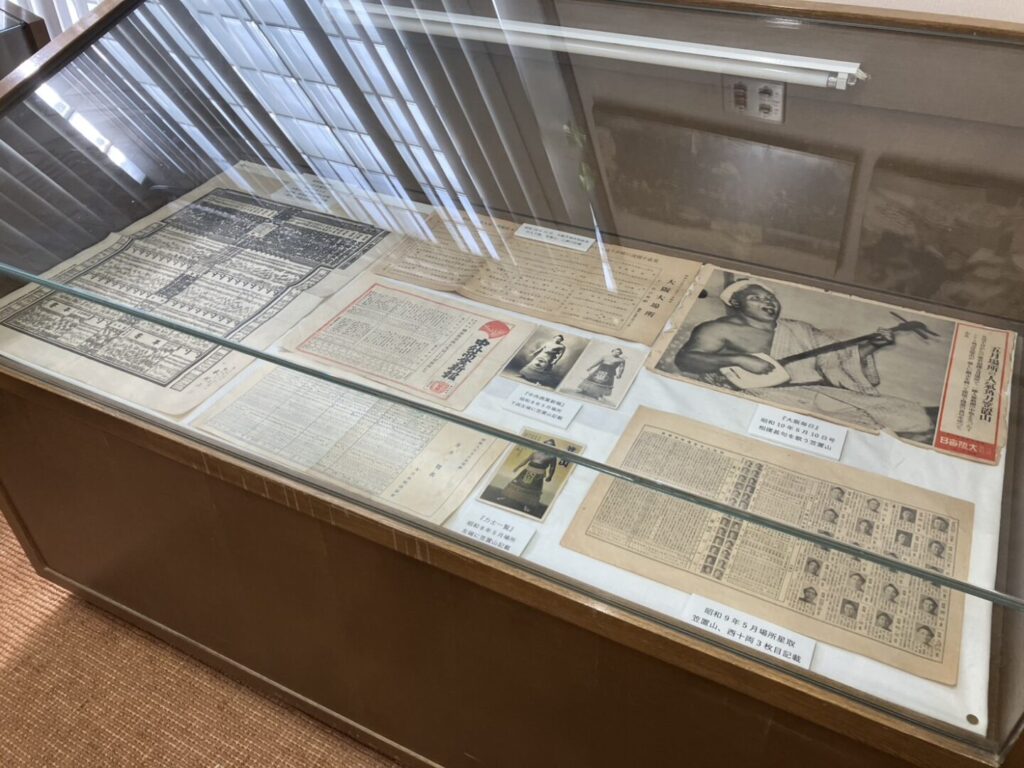
Katsuragi City Sumo Museum “Kehaya-za” is currently holding the special exhibition “Local Sumo Wrestlers Exhibition.”
This exhibition focuses on wrestlers from Nara Prefecture and introduces materials and stories related to wrestlers who rose to Sekitori status. Visitors can enjoy it together with the permanent “Sumo Wrestlers from Nara Prefecture” section.
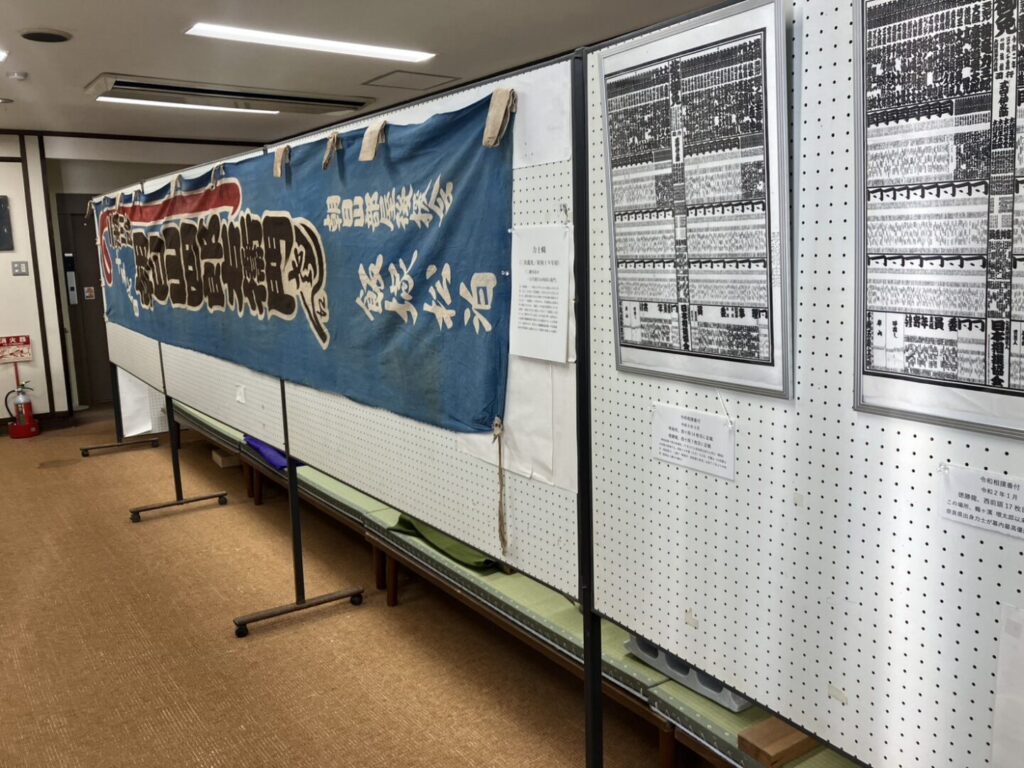
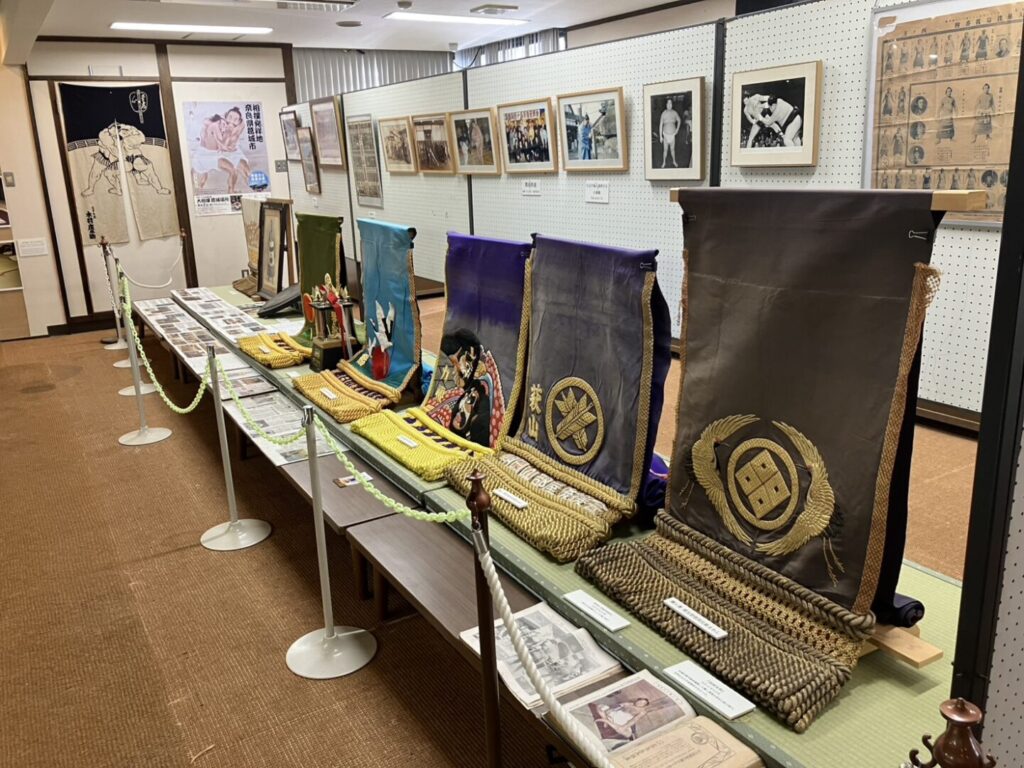
Exhibition period: Until Friday, July 31, 2026
There are 15 wrestlers from Nara Prefecture officially recognized by the Japan Sumo Association as having risen to Sekitori status. From the Edo-period wrestler Nijigatake Somaemon to Kotoyusho Yoshihiro, who retired in 2024, visitors can learn about the paths of wrestlers connected to Nara.
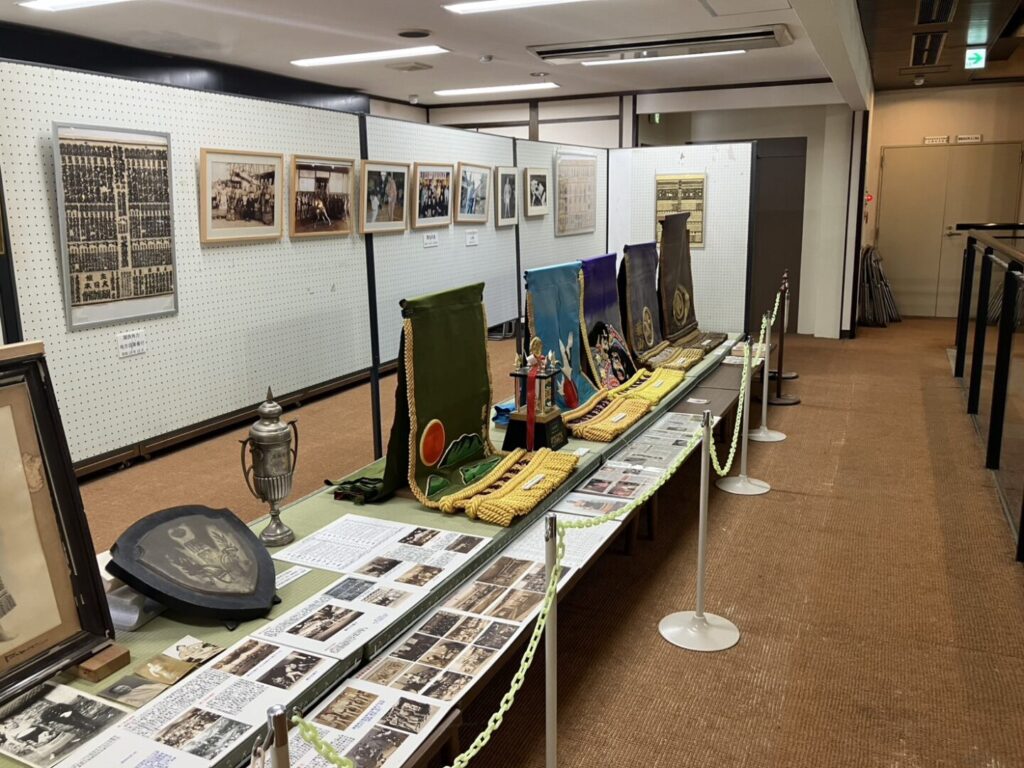
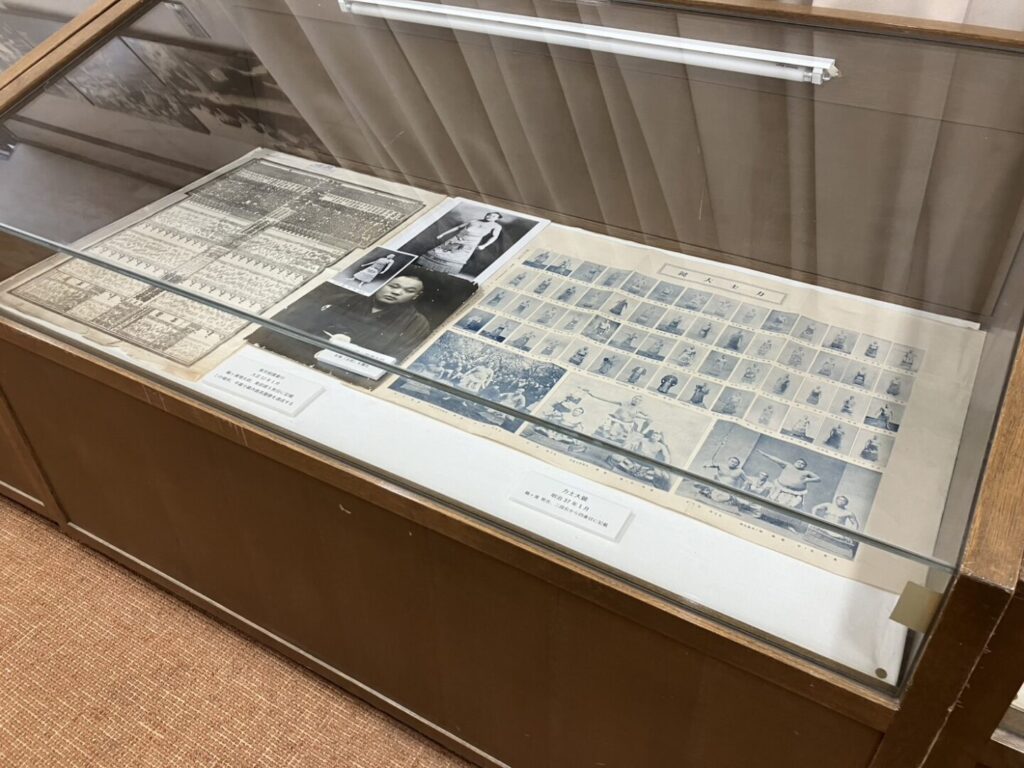
Tsurugahama Masutaro, from Katsuragi City, won the championship as a Hiramaku wrestler at the January 1923 Tokyo Sumo tournament. The ceremonial apron he used at the time is embroidered with two cranes.
The exhibition also includes the championship shield, trophies, ceremonial apron, and other items related to Yamatonishiki Yukio from Tawaramoto Town in Nara Prefecture, who won the final tournament of the Kansai Sumo Association, also known as the Dai-Nihon Kansai Sumo Association, which separated from the Japan Sumo Association in the early Showa period.
Materials related to Tokushoryu Makoto, from Nara City, are also on display. Tokushoryu won the January 2020 tournament from the lowest rank in Makuuchi. Visitors can see items such as a daruma doll made to commemorate his championship and the trophy for the Outstanding Performance Prize he received at the same tournament.
The “Local Sumo Wrestlers Exhibition” at Katsuragi City Sumo Museum “Kehaya-za” runs until July 31. After learning about the Banzuke, visitors may feel more deeply the paths these wrestlers have taken.
Related Article
Sumo Column Vol.1: Yokozuna and the Banzuke in Grand Sumo
References
- Japan Sumo Association Official Website: https://www.sumo.or.jp
- Materials displayed at Katsuragi City Sumo Museum “Kehaya-za”
HOME » New & Now » Call for Birthday Messages for Renkachan 2025