New & Now
Sumo Column Vol. 3: Sumo Techniques and Kimarite
Sumo Techniques and the Wrestlers Who Bring Them to Life
On June 13 and 14, 2026, a Grand Sumo performance was held at Accor Arena in Paris. It was the first Grand Sumo performance in Paris since 1995.
Many wrestlers from sumo’s top division, makuuchi, took part, and the approximately 15,000-seat arena was sold out on both days. Outside the arena, wrestlers also greeted fans, posed for photos, and shook hands, reflecting the enthusiasm surrounding the event.
Ozeki Kotozakura won the overall championship.
Among the wrestlers who drew particular attention in Paris was Ura.
On the first day of the makuuchi tournament, Ura lost to Aonishiki by sukuinage (beltless arm throw). Even in defeat, his skillful landing and remarkable athleticism drew a strong reaction from the crowd.
In October 2025, the Grand Sumo Tournament in London was held at the Royal Albert Hall, marking the first Grand Sumo performance in London since 1991.
Yokozuna Hoshoryu won the five-day event.
Ura again stood out for his dynamic, acrobatic style and wide range of techniques.
After losing to Yokozuna Onosato on the opening day, he defeated Fujinokawa on Day 2 with kainahineri (two-handed arm twist down).
On Day 3, he slipped beneath Shonannoumi’s arm and leaned backward to execute tsutaezori (underarm forward body drop).
Then, on Day 4, Ura ducked beneath Midorifuji’s attempted slap, moved inside, lifted him up, and won with tsuridashi (frontal lift out).
Together, the three victories illustrated the variety of techniques used in sumo.
Ura received both the Technique Prize and the Audience Award at the London event. He was also dubbed “The Magician,” reflecting the attention drawn by his distinctive range of techniques.
At both the Paris and London events, the outcome of each bout was only part of the appeal. The many techniques used by the wrestlers were just as fascinating to watch.
In this third sumo column, we take a closer look at sumo techniques and kimarite—the techniques that decide a bout.
Technique Prize
One of the awards presented at the London event, given to a wrestler recognized for outstanding technique.
Audience Award
An award decided by audience voting during the London event.
What Is a Kimarite?
In a one-on-one sumo bout, the technique used by the attacking wrestler to decide the match is called a kimarite (winning technique).
Before the bout is decided, the wrestlers draw on the strength and skills developed through daily training. They may push, thrust, throw, hook, twist, or use a range of other movements against their opponent.
The technique that ultimately decides the bout is recorded as the kimarite.
From the “Forty-Eight Techniques” to Today’s 82 Kimarite
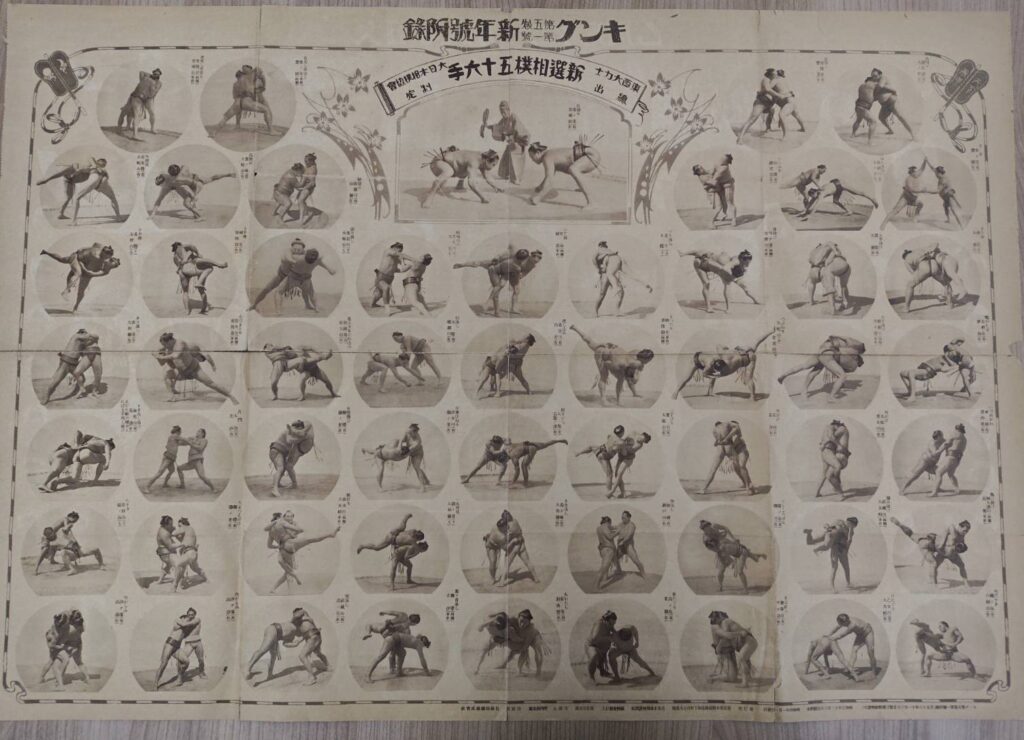
Sumo techniques have traditionally been referred to collectively as the “Forty-Eight Techniques.”
Documents from the Edo period describe an older four-part system of 48 techniques, divided into throws, leg techniques, backward body drops, and twists, with 12 techniques in each group.
This did not mean that only 48 sumo techniques existed. The number 48 was also used to suggest a large variety of techniques.
The way sumo techniques have been organized and classified has changed over time.
The photograph above also introduces an older collection of 56 sumo techniques.
Today, the Japan Sumo Association recognizes 82 kimarite.
There are also five outcomes classified as non-techniques, in which a wrestler loses without the opponent executing a decisive technique—for example, by losing balance, touching the ground with a hand or knee, or stepping out of the ring.
The 82 kimarite are divided into six categories:
- Basic Techniques: 7
- Throws: 13
- Leg Trips and Hooks: 18
- Backward Body-Drop Techniques: 6
- Twists: 19
- Special Techniques: 19
There are also five non-technique outcomes.
Sumo also has prohibited acts known as kinjite. Using a kinjite results in a loss by foul.
Separate rules can also result in a loss by foul in other situations, such as when a wrestler’s mawashi comes off during a bout.
Knowing the kimarite and basic rules makes it easier to understand what the wrestlers are trying to do—and adds another layer to watching sumo.
How a Sumo Bout Is Won
Sumo is contested between two wrestlers.
As a general rule, a wrestler wins by:
- making any part of the opponent’s body other than the soles of the feet touch the dohyo (sumo ring); or
- forcing the opponent outside the dohyo.
Within the confined space of the ring, wrestlers use their arms, hips, legs, balance, and entire bodies to break their opponent’s position and execute a technique.
Traditional ways of describing sumo techniques include categories based on movements such as throwing, hooking, bending backward, and twisting.
Today, the Japan Sumo Association organizes the official kimarite into 82 techniques.
The 82 Kimarite
The tables below provide a quick guide to the names and basic movements of all 82 kimarite.
Basic Techniques — 7
These are seven of the fundamental techniques in sumo.
Oshidashi — Frontal Push Out
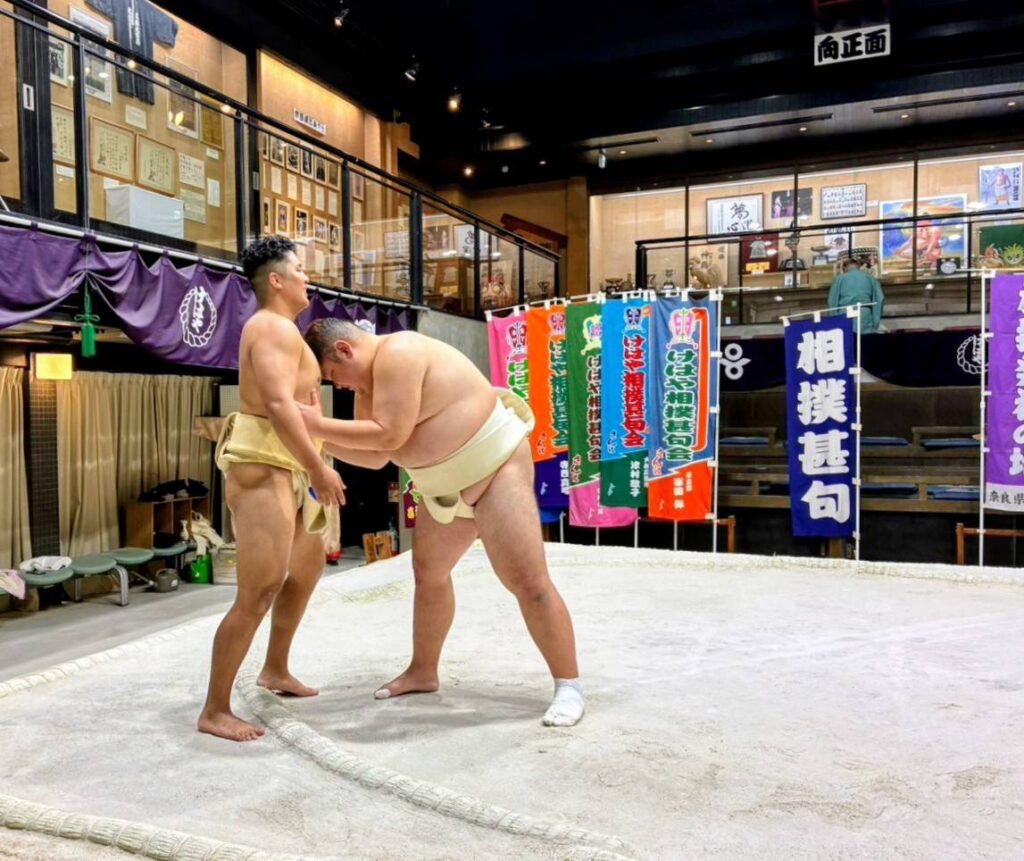
The wrestler pushes the opponent out of the dohyo without gripping the mawashi or using an inside arm position. Effective oshidashi depends on coordinating the hands, hips, and legs while driving forward in the same direction and pushing slightly upward.
Oshitaoshi — Frontal Push Down
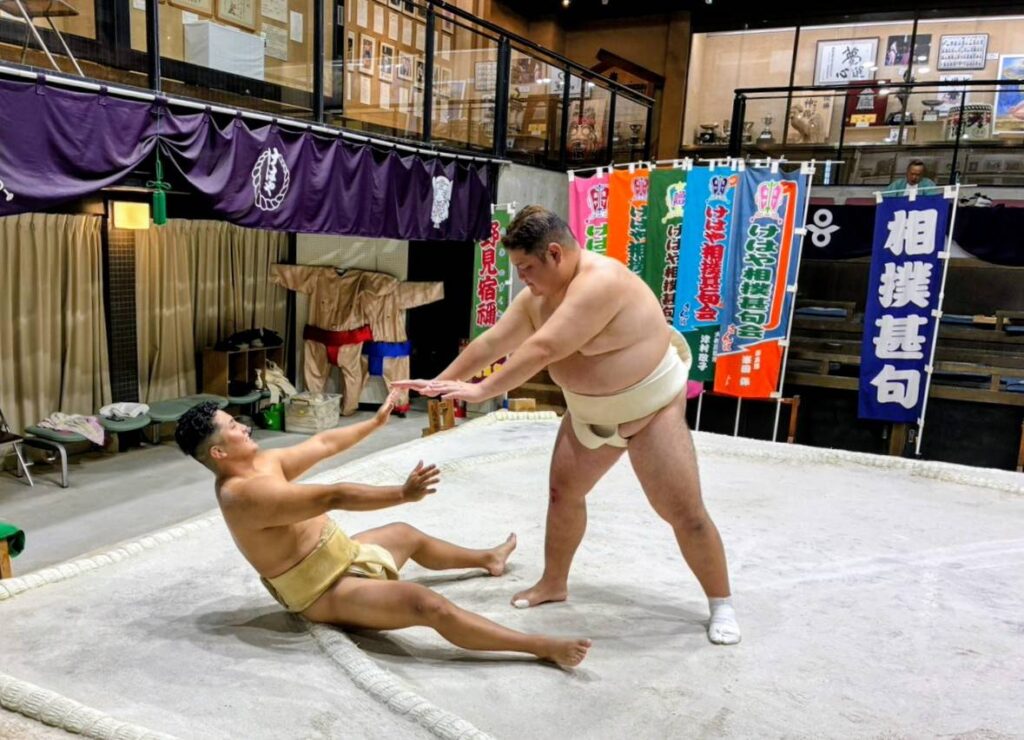
This technique begins in much the same way as oshidashi. When the opponent tries to hold their ground at the edge of the dohyo, the attacking wrestler continues to push forward and forces them down.
Tsukidashi — Frontal Thrust Out
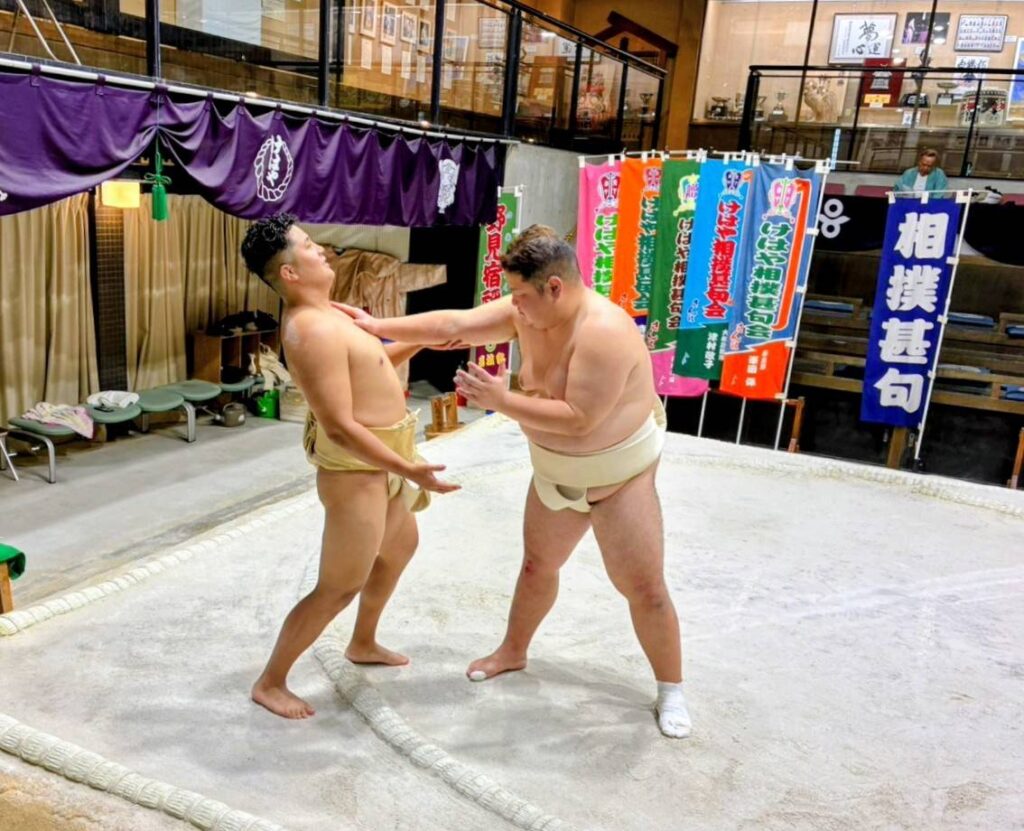
In tsukidashi, the wrestler uses repeated thrusts to drive the opponent out of the dohyo. The arms move rapidly, thrusting upward from below, while the wrestler advances with coordinated footwork.
Against an opponent charging forward, the wrestler can target the shoulders or chest while continuing to move forward. The technique can be particularly effective for a taller wrestler against a shorter opponent. However, a shorter wrestler can also use tsukidashi effectively by getting inside a taller opponent’s reach and using rapid, repeated thrusts at close range.
Tsukitaoshi — Frontal Thrust Down
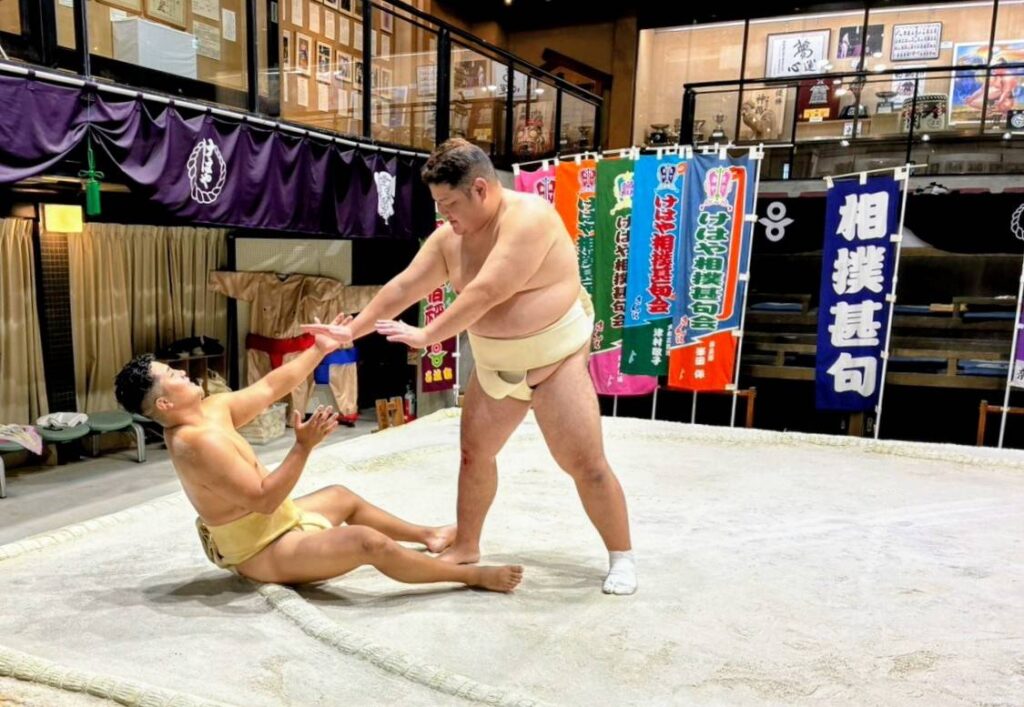
Tsukitaoshi uses the same basic thrusting action as tsukidashi. If the opponent is knocked down inside the dohyo or at its edge before stepping outside the ring, the winning technique is called tsukitaoshi.
Yorikiri — Frontal Force Out
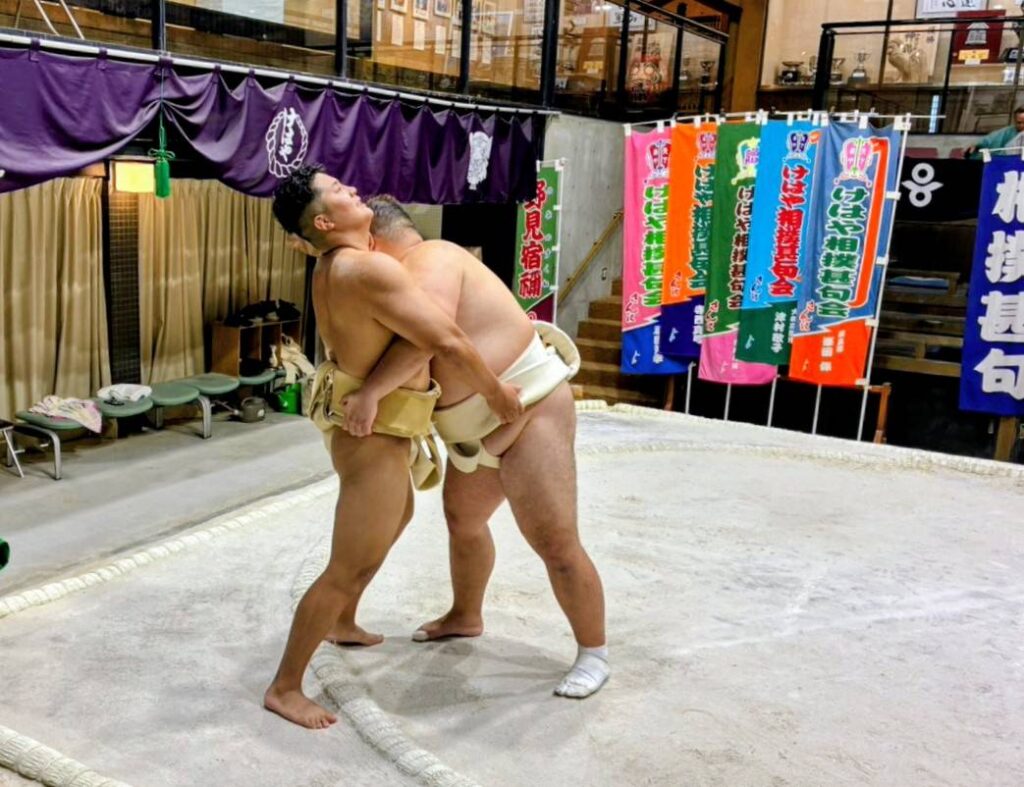
In yorikiri, the wrestler pulls the opponent’s mawashi firmly toward the body or turns the inside arm upward to raise the opponent’s center of gravity, then drives them out of the dohyo.
It is important to keep the hips low and the upper body relaxed rather than focusing only on forcing the opponent over the edge. For smaller wrestlers, it is generally considered better to avoid a gappuri-yotsu position, where both wrestlers have firm belt grips and face each other chest-to-chest.
Yoritaoshi — Frontal Force Down
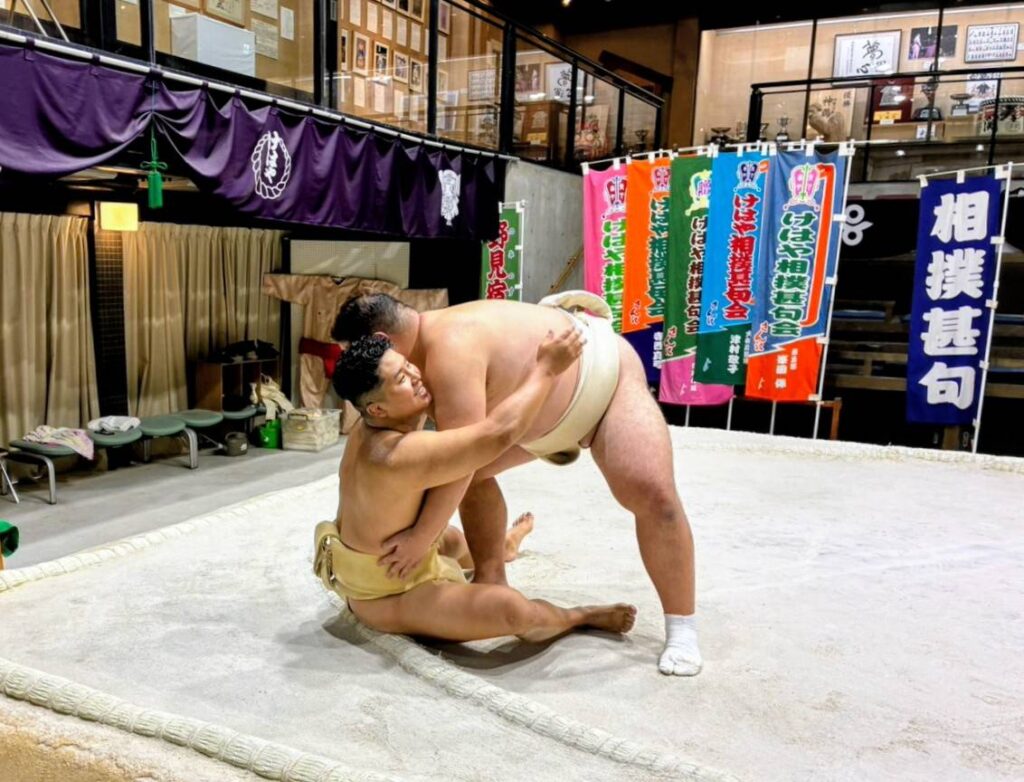
Yoritaoshi begins in much the same way as yorikiri. When the opponent braces and resists at the edge of the dohyo, the attacking wrestler lowers their center of gravity, pulls the mawashi in firmly, and drives the opponent down as they force them over the edge.
Abisetaoshi — Backward Force Down
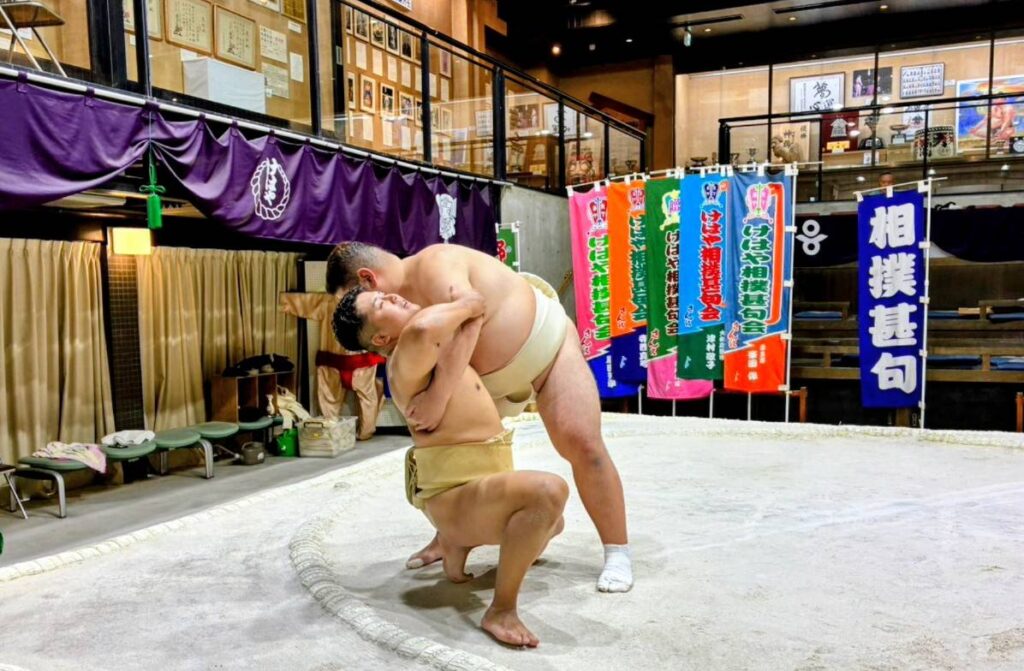
Abisetaoshi is used when the opponent is leaning backward or has lost stability and dropped into a lower position. The attacking wrestler uses their body weight to bear down on the opponent, overwhelming their stance and forcing them backward to the ground.
| Kimarite | Meaning |
| tsukidashi | frontal thrust out |
| tsukitaoshi | frontal thrust down |
| oshidashi | frontal push out |
| oshitaoshi | frontal push down |
| yorikiri | frontal force out |
| yoritaoshi | frontal force down |
| abisetaoshi | backward force down |
Throws — 13
These techniques decide a bout by throwing the opponent.
| Kimarite | Meaning |
| uwatenage | overarm throw |
| shitatenage | underarm throw |
| kotenage | armlock throw |
| sukuinage | beltless arm throw |
| uwatedashinage | pulling overarm throw |
| shitatedashinage | pulling underarm throw |
| koshinage | hip throw |
| kubinage | headlock throw |
| ipponzeoi | one-armed shoulder throw |
| nichonage | two-leg sweep throw |
| yaguranage | inner-thigh lifting throw |
| kakenage | hooking inner thigh throw |
| tsukaminage | rear-belt lift throw |
Leg Trips and Hooks — 18
These techniques use leg hooks, trips, sweeps, or grips on an opponent’s leg to break their balance.
| Kimarite | Meaning |
| uchigake | inside leg trip |
| sotogake | outside leg trip |
| chongake | inside heel-hook twist down |
| kirikaeshi | knee-prop backward twist down |
| kawazugake | hooking backward body drop |
| kekaeshi | inside ankle sweep |
| ketaguri | ankle kick-down |
| mitokorozeme | triple attack to both legs and chest |
| watashikomi | thigh-grabbing push down |
| nimaigeri | outer ankle kick-down |
| komatasukui | inside-leg scoop down |
| sotokomata | outside-leg scoop down |
| omata | far-leg scoop down |
| tsumatori | rear toe pick |
| kozumatori | front ankle pick |
| ashitori | leg pick |
| susotori | outside ankle pick |
| susoharai | rear foot sweep |
Backward Body-Drop Techniques — 6
These techniques involve dropping or arching the body backward to bring the opponent down.
| Kimarite | Meaning |
| izori | backward body drop |
| shumokuzori | shoulder-lift backward body drop |
| kakezori | hooking backward body drop |
| tasukizori | underarm leg-grab backward body drop |
| sototasukizori | outer leg-grab backward body drop |
| tsutaezori | underarm forward body drop |
Twists — 19
These techniques break the opponent’s balance through twisting movements involving the body or arms.
| Kimarite | Meaning |
| tsukiotoshi | thrust down |
| makiotoshi | wrap-around twist down |
| tottari | arm-bar twist down |
| sakatottari | counter arm-bar twist down |
| katasukashi | under-shoulder swing down |
| sotomuso | outer thigh propping twist down |
| uchimuso | inner-thigh sweeping twist down |
| zubuneri | head-pivot twist down |
| uwatehineri | overarm belt twist down |
| shitatehineri | underarm belt twist down |
| amiuchi | arm-wrap backward twist down |
| sabaori | waist-crushing force down |
| harimanage | over-the-head belt throw |
| osakate | deep overarm belt throw |
| kainahineri | two-handed arm twist down |
| gasshohineri | clasped-hands neck twist down |
| tokkurinage | two-handed head twist down |
| kubihineri | head-and-arm twist down |
| kotehineri | arm-lock belt-grip twist down |
Special Techniques — 19
These are the 19 kimarite classified outside the five categories above.
| Kimarite | Meaning |
| hikiotoshi | hand pull down |
| hikkake | arm-hook pull down or out |
| hatakikomi | slap down |
| sokubiotoshi | neck chop down |
| tsuridashi | frontal lift out |
| okuritsuridashi | rear lift out |
| tsuriotoshi | frontal lift-and-drop |
| okuritsuriotoshi | rear lift-and-drop |
| okuridashi | rear push out |
| okuritaoshi | rear push down |
| okurinage | rear throw |
| okurigake | rear leg trip |
| okurihikiotoshi | rear pull down |
| waridashi | upper-arm-and-belt force out |
| utchari | backward pivot throw |
| kimedashi | arm-lock force out |
| kimetaoshi | arm-lock force down |
| ushiromotare | backward lean out or down |
| yobimodoshi | pull-and-thrust body drop |
Five Non-Technique Outcomes
These are outcomes in which a wrestler loses without the opponent executing a decisive kimarite.
| Outcome | Meaning |
| isamiashi | accidental forward step out |
| koshikudake | unforced collapse |
| tsukite | unforced hand touch down |
| tsukihiza | unforced knee touch down |
| fumidashi | unforced step out |
The romanized kimarite above follow Japan Sumo Association usage. The short English meanings are explanatory reader aids rather than separate official English names.
Five of the Most Common Kimarite
According to the Japan Sumo Association’s kimarite rankings, covering 190,450 bouts from the January 2013 tournament through the final day of the July 2026 tournament, the five most common techniques are:
- oshidashi — Basic Technique
- yorikiri — Basic Technique
- hatakikomi — Special Technique
- tsukiotoshi — Twist
- yoritaoshi — Basic Technique
Here is a closer look at these frequently seen techniques.
Oshidashi — Frontal Push Out
In oshidashi, a wrestler places one or both hands against the opponent—often around the chest or beneath the arms—and pushes the opponent out of the dohyo.
A hand position known as hazu is often used. The thumb is spread apart from the other four fingers, forming a Y-like shape.
The technique is not simply about arm strength. Coordinating the hands, hips, and legs while continuing to move forward is also important.
Yorikiri — Frontal Force Out
In yorikiri, a wrestler stays close to the opponent, often gripping the mawashi or using an inside arm position, and drives forward or sideways until the opponent is forced out of the ring.
Watch how the attacking wrestler lowers their own hips while trying to raise the opponent’s center of gravity.
Hatakikomi — Slap Down
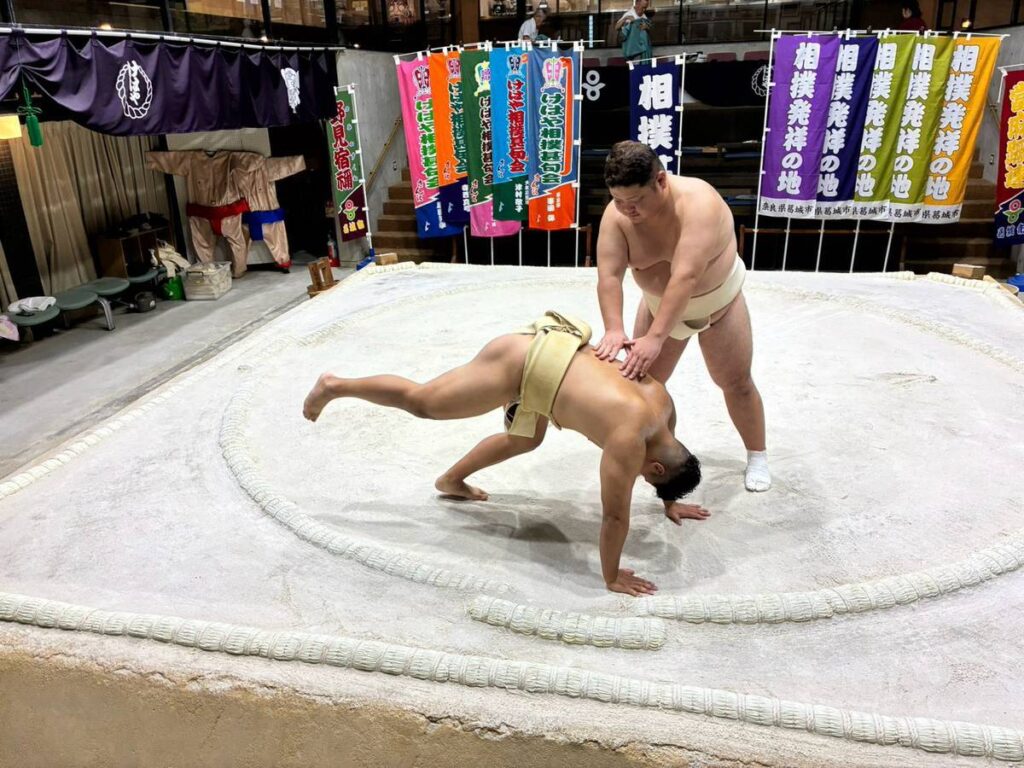
In hatakikomi, a wrestler reacts as the opponent charges forward from a low position.
While moving the body aside, the wrestler uses one or both hands to slap or press down on the opponent’s shoulder, back, or arm, causing the opponent to fall forward.
The opponent’s own forward momentum can become an important part of the technique.
Tsukiotoshi — Thrust Down
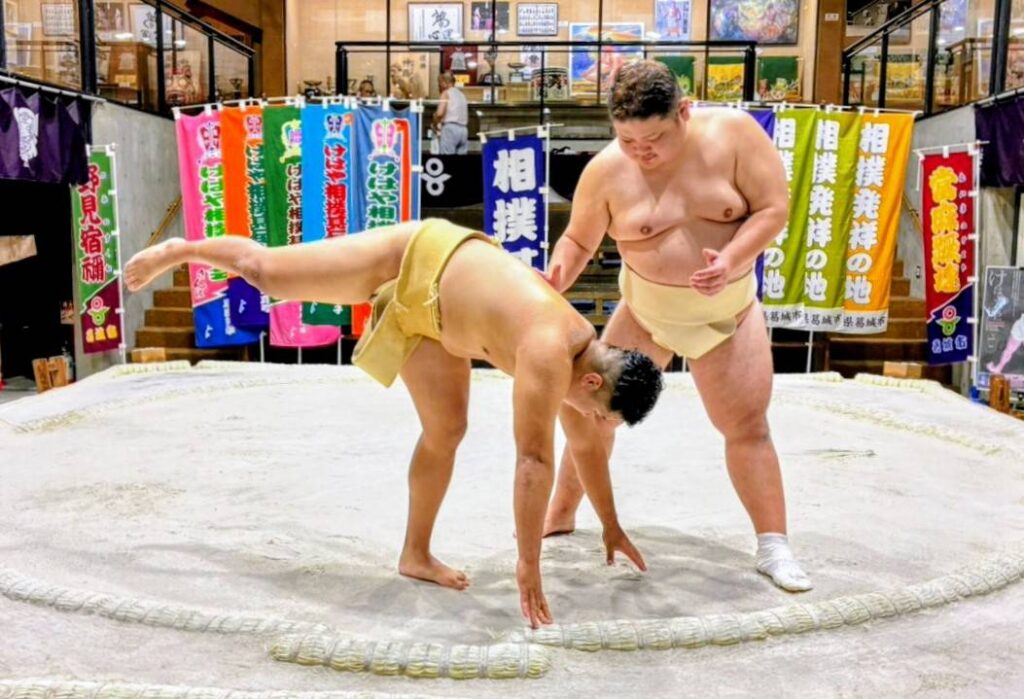
In tsukiotoshi, a wrestler places one hand around the opponent’s side or beneath the arm and turns the body while directing the opponent diagonally downward, breaking their balance and bringing them to the ground.
Yoritaoshi — Frontal Force Down
In yoritaoshi, a wrestler stays tightly connected to the opponent and drives forward.
When the opponent tries to hold position near the edge of the ring, the attacking wrestler keeps the bodies together and forces the opponent down.
What Are Kinjite?
Grand Sumo has a set of prohibited acts known as kinjite.
A wrestler who uses a kinjite loses the bout by foul.
The Japan Sumo Association’s judging rules list eight prohibited acts:
- Striking an opponent with a closed fist
- Grabbing the opponent’s hair
- Attacking the eyes, solar plexus, or other vital areas
- Slapping both ears simultaneously with both palms
- Grabbing the front vertical part of the mawashi, or inserting fingers from the side and pulling it
- Grabbing the throat
- Kicking the chest or abdomen
- Bending back one or two of the opponent’s fingers
Striking With a Closed Fist
Punching an opponent with a closed fist is prohibited.
Grabbing the Hair
A wrestler may not grab the opponent’s hair or topknot.
Attacking Vital Areas
Direct attacks to the eyes, solar plexus, or other vital areas are prohibited.
Slapping Both Ears at the Same Time
A wrestler may not strike both of the opponent’s ears simultaneously with both palms.
Grabbing the Front of the Mawashi
Grabbing the front vertical section of the mawashi, or inserting fingers from the side and pulling it, is prohibited.
Grabbing the Throat
A wrestler may not grab an opponent by the throat.
This is different from nodowa, a legal attacking movement in which the hand is placed against the opponent’s throat or upper neck area and used to push upward.
Kicking the Chest or Abdomen
Kicking an opponent in the chest or abdomen is prohibited.
Bending Back the Fingers
A wrestler may not take one or two of an opponent’s fingers and bend them backward.
There is also a traditional comic sumo performance called shokkiri, in which two wrestlers humorously demonstrate sumo techniques, rules, and illegal maneuvers.
Shokkiri dates back to the Edo period and can still be seen on regional sumo tours and at other special sumo events.
If you have the opportunity to attend a regional tour, these performances offer another way to discover the culture surrounding sumo.
Thanks to the Participants in Our Technique Photos
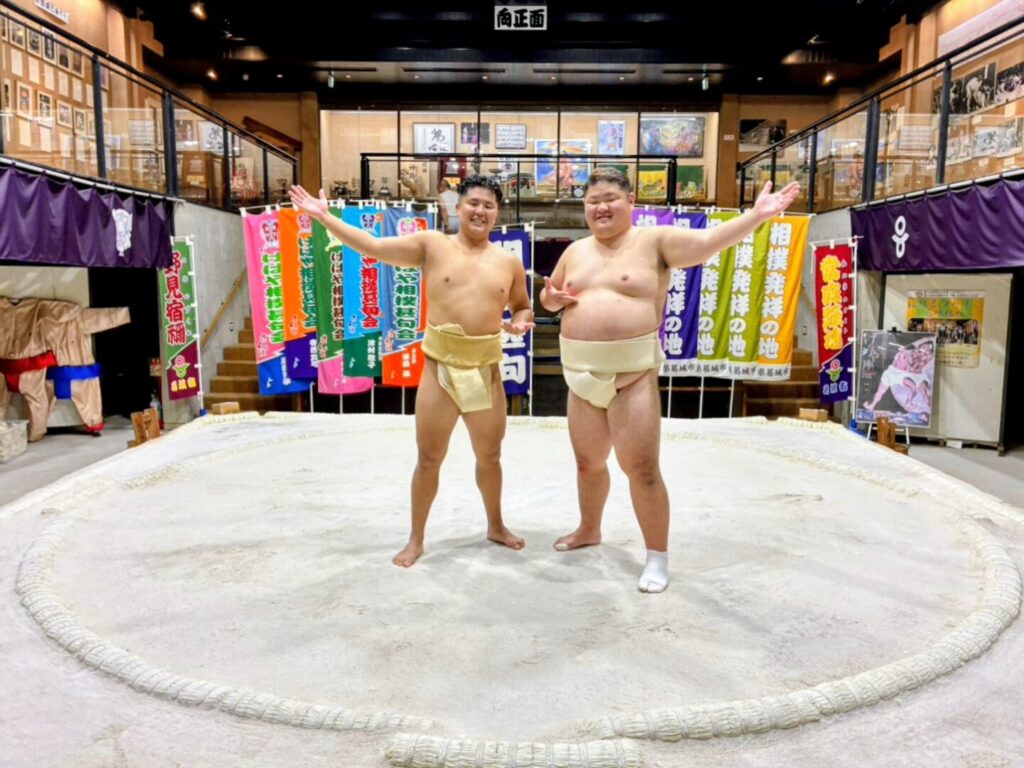
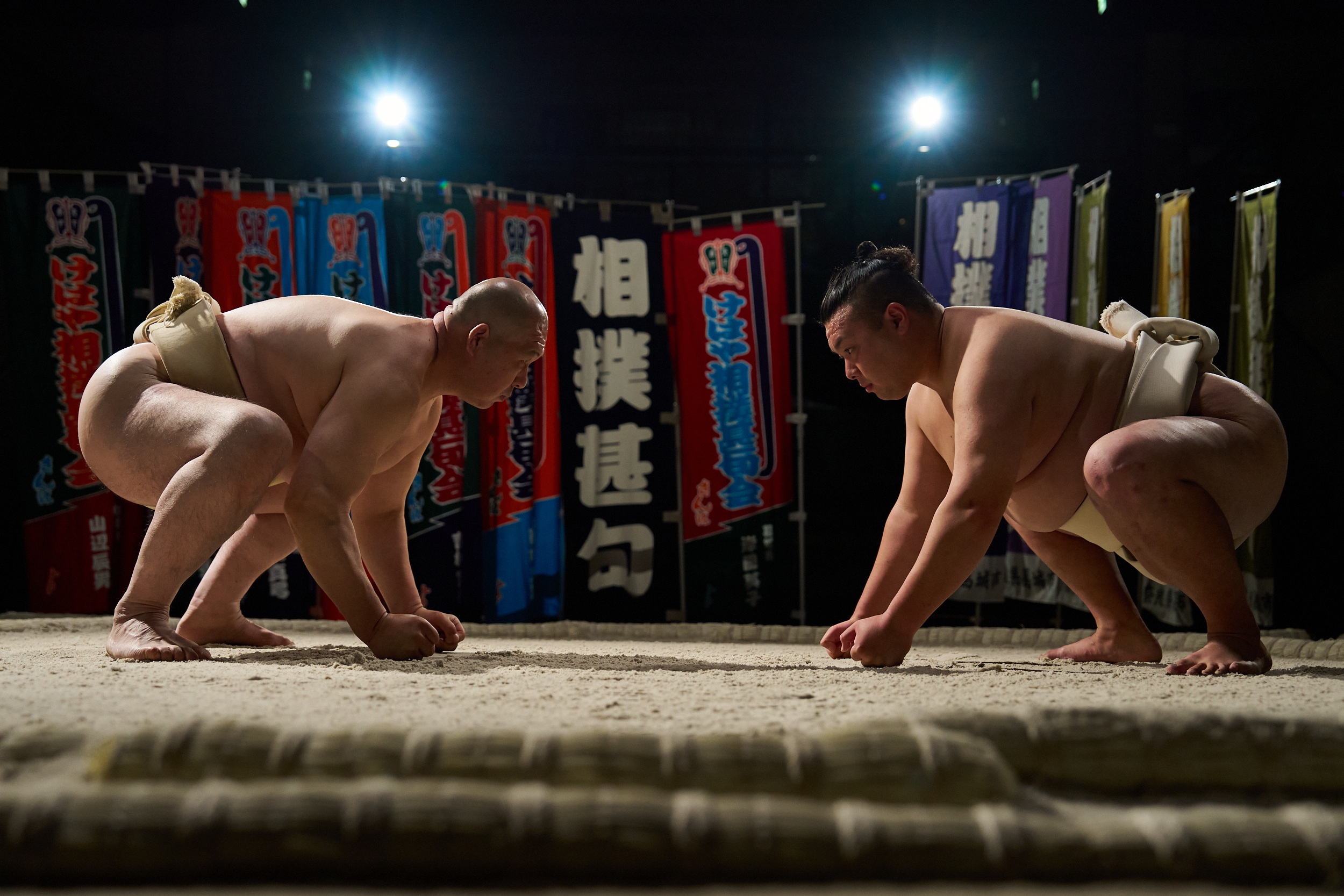
Right: Ryuji Morimoto, who competed as Hakkairyu while at Miyagino Stable and now runs Hakkai, an izakaya in Katsuragi City
Left: A student sumo wrestler from Kwansei Gakuin University
Location: Katsuragi City Sumo Museum “Kehayaza”
Step Onto a Full-Sized Dohyo and Try Sumo for Yourself
Katsuragi City Sumo Museum “Kehayaza” has a dohyo built to the same dimensions as the ring used in professional Grand Sumo tournaments.
Because it is an exhibition dohyo, visitors of all ages and genders may step onto the ring themselves.
Please note that access to the dohyo may occasionally be restricted because of events or group use.
Visitors can also try wearing a mawashi or sumo-themed costume, scatter salt, and get a taste of what it feels like to be a sumo wrestler.
Please contact the museum in advance if you would like to try the sumo activities.
Katsuragi City Sumo Museum “Kehayaza”
_sizedown-1024x683.jpg)
Katsuragi City has traditions and legends closely associated with the origins of sumo.
The Kojiki, compiled in 712, and the Nihon Shoki, compiled in 720, contain ancient Japanese myths and accounts involving contests of strength.
The Nihon Shoki records a contest between Nomi no Sukune and Taima no Kehaya, said to have taken place in the presence of the emperor.
Katsuragi City is home to Kehaya-zuka, a memorial site associated with Taima no Kehaya, and the museum also displays a panel depicting the legendary contest between Nomi no Sukune and Taima no Kehaya.
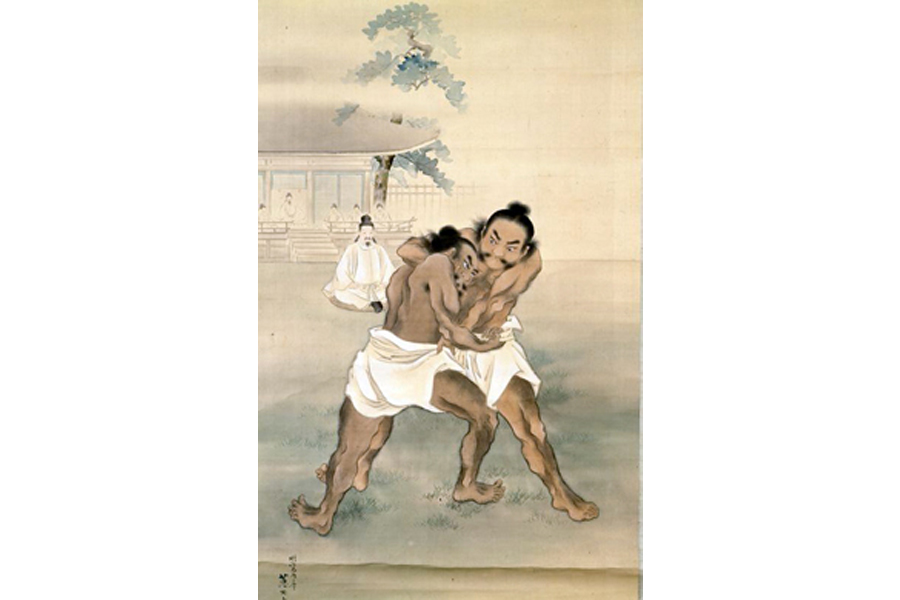
Katsuragi City Sumo Museum “Kehayaza” opened in May 1990 to honor Taima no Kehaya, who is regarded in local tradition as one of the legendary figures associated with the origins of sumo.
The museum contains a dohyo built to the same dimensions as those used in professional sumo tournaments. Because it is an exhibition ring, visitors can step onto it themselves, although access may be restricted during events or group use.
The museum also houses approximately 12,000 sumo-related materials, including books, banzuke ranking sheets, and match records. The collection is used by students conducting research as well as by sumo enthusiasts.
The museum shop sells sumo-related goods.
Among them is an illustrated Japanese-language guide to the 82 kimarite featured in this column, titled 『相撲技 取り組み八十二手』.
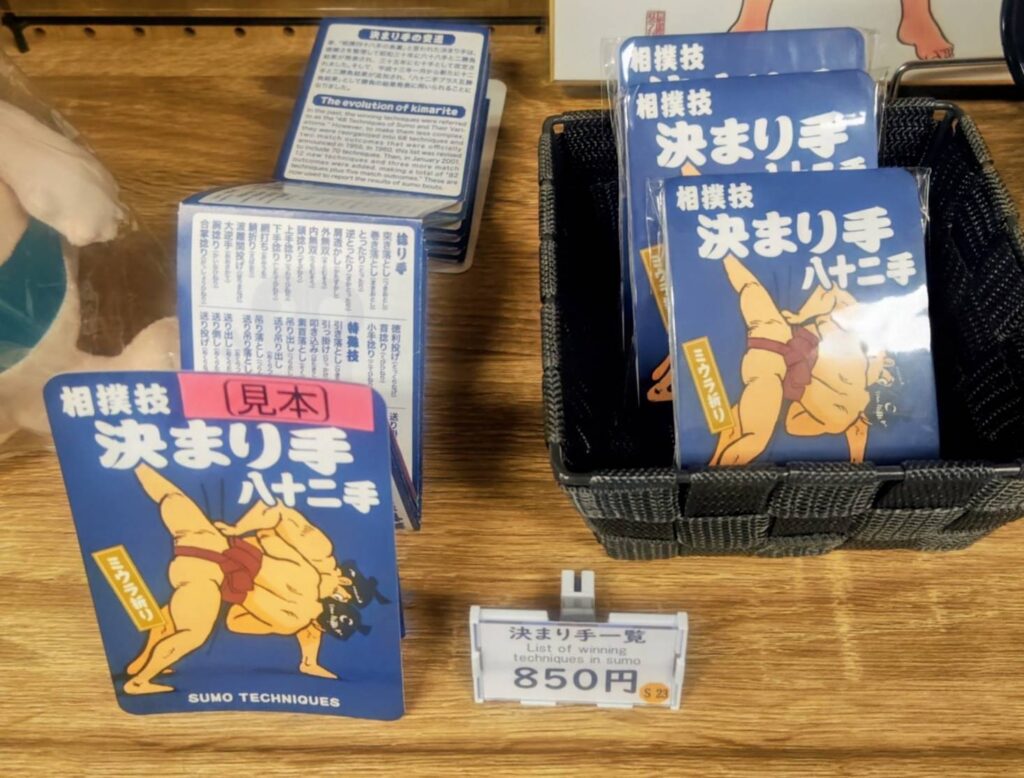
Goods featuring individual wrestlers, including towels bearing Ura’s name, are also available.
Visitor Information
Opening Hours: 10:00 a.m.–5:00 p.m.
Closed: Tuesdays and Wednesdays
Admission:
- Adults: 300 yen
- Elementary and junior high school students: 150 yen
Group Rates for 20 or More:
- Adults: 250 yen
- Elementary and junior high school students: 120 yen
Katsuragi City Sumo Museum “Kehayaza”
https://www.city.katsuragi.nara.jp/soshiki/sumokan/5875.html
Katsuragi City Tourism Video Also Available in French
To coincide with the Grand Sumo performance in Paris, a French-language version of Katsuragi City’s tourism promotion video is also available.
The tourism video is available in Japanese, English, and French, along with shorter versions in all three languages.
References
Japan Sumo Association
https://www.sumo.or.jp/
Katsuragi City Sumo Museum “Kehayaza” / Katsuragi City
https://www.city.katsuragi.nara.jp/soshiki/sumokan/5875.html
Materials from the collection of Katsuragi City Sumo Museum “Kehayaza”
Yuji Noda, Yuji Noda, 『相撲:はじめて相撲を志す人のために』 (Japanese)
Sumo: Hajimete Sumo o Kokorozasu Hito no Tame ni
More Sumo Columns
Sumo Column Vol.1: Yokozuna and the Banzuke in Grand Sumo
https://www.guidoor.jp/katsuragi-city/en/news/sumo-column-1-yokozuna-banzuke/
Sumo Rankings from Jonokuchi to Ozeki
https://www.guidoor.jp/katsuragi-city/en/news/sumo-column-2/
.png)